Music Studio Bali — 2026 Recording, Rehearsal & DJ Rates Guide
TL;DR
Bali has roughly twelve music spaces that publish hourly rates, and the phrase "music studio" covers four distinct products: recording rooms, rehearsal spaces, DJ practice booths, and karaoke-grade rooms. Verified rates run from Rp300k at Hard Rock Bali's Boom Box to Rp6M an hour at W Sound Suite in Seminyak. Most first-time bookings fail because the format and the room don't match — a hobbyist demo lands in a Rp3.5M retreat suite, a label producer ends up in a karaoke booth. The right room depends less on price than on whether you're capturing, practising, or producing. The music cluster lives in Ubud and Denpasar, not in Canggu — the inverse of the podcast scene.
What "music studio" actually means on Bali
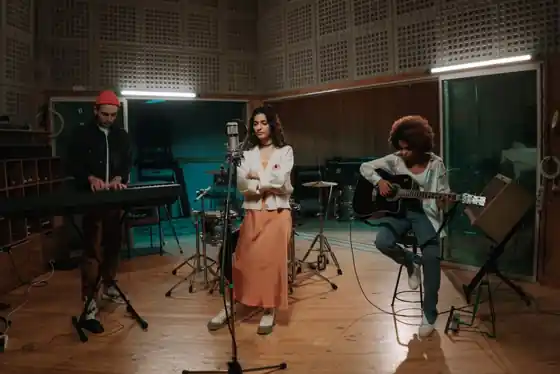
On Google, "music studio bali" returns four genuinely different products listed under the same label. The marketing photos look interchangeable; the brief and the bill aren't.
Recording studio. A room built to capture sessions to broadcast standards. Treated walls, a real preamp chain (Universal Audio Apollo, SSL, Neve-class consoles where applicable), multitrack capture into Pro Tools, Logic, or Ableton, and a multitrack deliverable in WAV at 24-bit/48kHz. Soma Sound Studios in Ubud is the only verified SSL 9000J console on Bali. AMPS Music Studio in Denpasar and Mercury Music Studio in South Kuta are the most-reviewed music recording rooms in our catalogue.
Rehearsal space. A treated room you practice in. PA system, drum kit, bass and guitar amps, microphone stands — but the room is not optimised for capture. Bali is under-supplied here: most operators list themselves as music studios but rent the room out for recording first and tolerate band rehearsal as a side product when the calendar allows. Practice rates, when published, run roughly half the recording rate at the same operator.
DJ practice booth. A room with Pioneer DJ kit — CDJs or XDJs, a mixer, studio monitors, optionally a vinyl turntable for crate digging. Used for set practice, demo recording for club residencies, or remote streaming. Genesis Creative Centre in Canggu publishes a Rp350k-per-hour DJ rate that's distinct from its Rp600k music studio rate — the same room, different gear configurations.
Karaoke and casual recording. Voice plus backing track. Boom Box Recording Studio at Hard Rock Hotel Bali is the canonical Bali example — Rp300k for a two-hour karaoke session, Rp400k to record two songs with a CD deliverable. Not a professional capture environment; not trying to be.
The rest of this guide treats these as four separate products. Picking the wrong one is the most common first-booking mistake on the island.
How much does a music studio cost in Bali?
Verified hourly rates from operator pages and our April 2026 catalogue refresh. Four tiers, mapped to the four products above.
Budget — Rp300k to Rp600k per hour. Boom Box at Hard Rock Hotel Bali asks Rp300k for a two-hour karaoke session and Rp400k for live instrument recording (two songs, 90 minutes, with a CD delivered). Genesis Creative Centre's DJ practice rate is Rp350k/h. Honest fit for karaoke, DJ practice, or a first demo recording where the budget is the constraint and the deliverable is a stereo bounce.
Mid-market — Rp600k to Rp1.5M per hour. Genesis Creative Centre's music studio room runs Rp600k/h for production work — Pioneer DJ kit, an iMac with Ableton Live 11 and Logic Pro X, Shure SM7B and Audio Technica AT2020 microphones, a Focusrite Scarlet 2i2 interface, plus electric and acoustic guitars and a Marshall amp. The mid-tier in Denpasar (Debeat Creative Hub, parts of AMPS Music Studio) sits in the same neighbourhood. Real production capability, predictable mic chain, no SSL-class console.
Premium — Rp1.5M to Rp3.5M per hour (or per session, depending on operator). Aya Studios in Tabanan runs four production studios, a DJ room, and a mastering suite alongside an event space, a 25-metre pool, and a 300-square-metre garden — retreat-style premium. AMPS Music Studio in Denpasar (4.6★ across 315 GMaps reviews) and Mercury Music Studio in South Kuta (5.0★ across 349 reviews, the most-reviewed music studio on the island) operate at the upper edge of this band on production sessions.
Destination — Rp3.5M and up. Soma Sound Studios in Ubud quotes retreat packages rather than hourly rates; the SSL 9000J console alone puts it on a different shelf from anything else on Bali. Studio42 in Ubud lists Rp3.5M for two hours. W Sound Suite at the W Bali Seminyak hotel sits at Rp4M–Rp6M per hour — the highest published rate in our caller logs. The Seed Bali's subterranean recording basement (90 square metres of isolation) operates on a retreat-package basis. These rooms target label work, touring artists on retreat, and premium brand audio.
The honest upgrade curve: from Rp300k karaoke to Rp600k production is a real product change. From Rp600k to Rp1.5M is a meaningful mic chain and room treatment jump. From Rp1.5M to Rp6M is mostly the operator's calendar, the room's reputation, and a retreat or hotel-suite ecosystem around the booking — not a proportional jump in audio quality. Past Rp1.5M, you are paying for context as much as for the chain.
Recording, rehearsal, DJ booth — what each one actually is
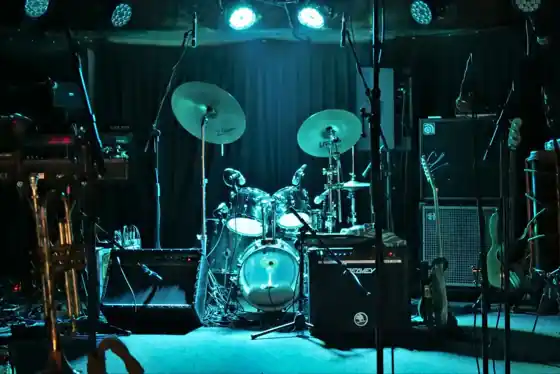
Four products, four briefs. Knowing which one you need before the booking call saves the back-and-forth on session day.
Recording. Multitrack capture, individual stems per microphone in WAV at 24-bit/48kHz, a treated room with measured RT60 of 0.3–0.4 seconds, real preamps. The deliverable is the stems plus a cut. Soma in Ubud, AMPS in Denpasar, and Mercury in South Kuta sit at the top of this product. The booking question is multitrack stems and channel count, not how nice the lounge looks.
Rehearsal. Practice space. The room is treated enough for the band to hear itself without ear fatigue, the gear is on hand (drums, amps, monitors, microphones for vocal monitoring), and the operator doesn't pretend the room is built for capture. Bali charges roughly half the recording rate for rehearsal-only blocks at the same operator — when the operator publishes the rate at all. Many don't, and rehearsal is a side-product to the recording calendar. Ubud (Studio Kubu) and Denpasar (Debeat, AMPS off-peak) are the practical clusters.
DJ booth. Pioneer DJ kit, monitors, optionally a vinyl turntable, occasionally a small recording chain into Logic or Ableton for streaming a set. Used for practice ahead of a residency or for capturing a demo set to send to a club. Genesis in Canggu is the published-rate anchor at Rp350k/h. Some operators bundle it into their music studio rate, some price it separately — ask explicitly.
Karaoke and demo recording. Voice plus a pre-recorded backing track, captured into a stereo bounce. Boom Box at Hard Rock Bali is the cleanest example — Rp300k for a two-hour session, Rp400k to walk out with a CD. The format mismatch comes from treating this as cheap recording: it isn't recording in the production-grade sense, it's karaoke with a save button. For a birthday or a one-shot keepsake, fine. For an artist demo a label will hear, it isn't the right room.
The single most useful question for any Bali music studio call: which of these four products are you actually selling, and how is it priced? Operators who answer cleanly are running a clear room. Operators who blur the answer often have a recording room they rent out as everything else.
Eight Bali music studios — by format and what each does best
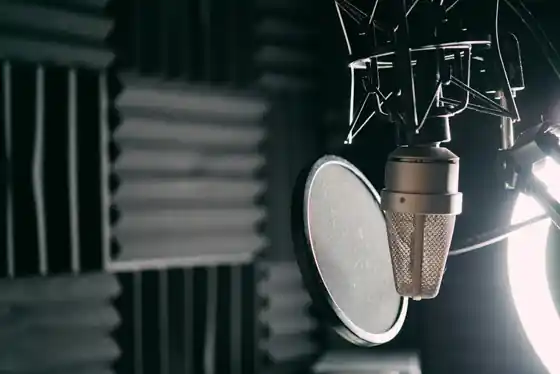
Ranked by clarity of format fit, not by price alone. Verified through operator pages, GMaps reviews, and our April 2026 caller logs.
Soma Sound Studios (Ubud) — recording retreat, SSL 9000J. The only SSL 9000 J console on Bali. Two studios — Studio A and Studio B — with 24-hour access for booked sessions, full multitrack capture, mixing and mastering, and one-on-one music-production tuition. Pricing on a retreat-package basis rather than per-hour. Built for full-band recording, label work, and artists who travel to Bali specifically for the room. Overkill for an audio podcast, and the team will tell you so before they take the deposit.
AMPS Music Studio (Denpasar) — Bali's highest-volume music recording brand. 4.6★ across 315 GMaps reviews — the most-reviewed music studio on the recording-focused side of the catalogue. Production rooms tuned for tracking and mixing. Mid-to-premium pricing; ask for current rates by format on the booking call.
Mercury Music Studio (South Kuta) — top-rated music studio on the island. 5.0★ across 349 GMaps reviews — the single most-reviewed music space in our entire catalogue across all formats. Production-grade recording. South Kuta location means the commute from Canggu costs an hour each way in afternoon traffic; book it only if you're already south of the airport or planning a full session-day.
Aya Studios (Tabanan) — four-studio + DJ + mastering complex. Riverside complex with four production studios, a dedicated DJ room, and a mastering suite, plus a 25-metre swimming pool and a 300-square-metre garden as the retreat ecosystem. 5.0★ across 63 reviews. Premium pricing aligned with the destination format.
Genesis Creative Centre (Canggu) — published rates, multi-format. Music studio room at Rp600k/h; DJ practice rate at Rp350k/h. Pioneer DJ kit, an iMac running Ableton Live 11 and Logic Pro X, Shure SM7B and AT2020 microphones, Focusrite Scarlet 2i2 interface, plus electric and acoustic guitars and a Marshall amp. The most-published-pricing music studio in the Canggu cluster. Honest caveat: Genesis responds to less than a third of its GMaps reviews — high volume, lower service depth on individual sessions.
The Seed Bali — subterranean recording basement. A 90-square-metre underground space marketed as world-class isolation for recording, performance, and creative residency. Retreat-package basis. Suited to producers and artists who want a private creative environment rather than an hourly booking.
W Sound Suite (Seminyak) — Rp4M–Rp6M per hour, hotel-suite premium. Inside the W Bali Seminyak hotel. Writer's room access, private vocal booth, master classes built into the booking. The highest published per-hour rate on Bali by a clear margin. Target audience: touring artists in residence at the hotel, label producers needing a premium ecosystem alongside the room, brand audio work where the room is one line item in a larger production budget.
Boom Box Recording Studio (Hard Rock Hotel Bali) — karaoke and demo. Karaoke session Rp300k for two hours; live instrument recording Rp400k for two songs across 90 minutes with a CD deliverable. Honest fit for birthday-grade karaoke and one-shot demos. Not built for label-grade production; doesn't claim to be.
The practical map: production-grade recording lives in Ubud (Soma) and Denpasar (AMPS), with Mercury as the South Kuta anchor. Multi-format and DJ practice lives in Canggu at Genesis. Retreat-grade destination work lives at Aya (Tabanan), The Seed, and W Sound Suite (Seminyak). Karaoke and demo work lives at Boom Box. Match the room to the brief before the deposit.
Premium music studios — when Rp3.5M an hour pays off
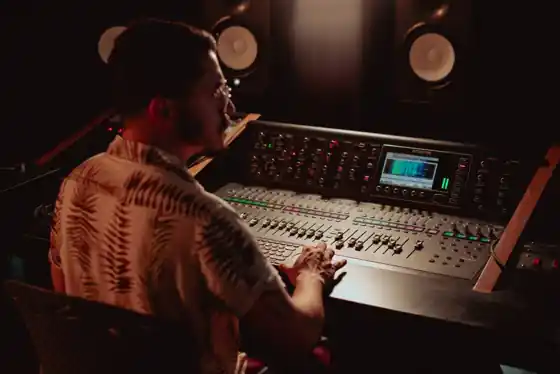
Soma's SSL 9000J, W Sound Suite's Rp4M–Rp6M-per-hour rate, Studio42's Rp3.5M-for-two-hours quote. These rooms exist on Bali for a real reason. They also don't make sense for most bookings that walk into the call expecting them to.
The ROI test sits on three questions. First, does your finished output sell at premium prices — a course bundle north of $5 000, a record release behind a label budget, a brand campaign with a six-figure media buy? If yes, the room is a line item the budget already supports. If the answer is a hobbyist demo or a self-released single, the budget will catch you on session day.
Second, do you actually need an SSL-class console or a hotel-suite ecosystem? Most production work on Bali finishes inside Logic Pro or Ableton with plugins that emulate the same desk. The console matters when the deliverable is a major-label-grade mix or when the room itself is the artistic constraint (drum sound on a specific console). For 95% of singles and 90% of mid-tier brand audio, the mid-market Rp1.5M tier closes the audible gap.
Third, are you buying the room, or the operator's calendar? Past Rp1.5M per hour on Bali, you are increasingly paying for the room's reputation, the booking ecosystem around it, and the producer's time — not for proportionally better microphones in front of you. That is fine if the reputation matters for the project. It is overspend if the deliverable is a YouTube single your audience will hear at -14 LUFS through phone speakers.
Our honest recommendation: if you are a label producer with a specific artist booked, the premium tier earns its rate. If you are a touring artist on retreat at Aya or W Sound Suite, the room is part of the trip and the budget already absorbed it. If you are a hobbyist who saw the Soma photos on Instagram and wants the experience, that is a real reason and we will not argue against it — but recognise that the project will not earn the room back, and budget accordingly. The right fit for a first single is a Rp600k–Rp1.5M room. The premium tier is for the second or third record, after the audience exists.
How to book a music studio in Bali — step by step
1. Pick the format before you pick the room. Recording, rehearsal, DJ practice, or karaoke — the four are not interchangeable, and the same operator may sell some of them and not others. Start with the deliverable: stems for a producer, a live-room practice block, a DJ set demo, a karaoke save file. The format determines which operators are even in scope.
2. Match the district to the music scene on Bali specifically. The music cluster on the island lives in Ubud (Soma, Studio Kubu, Studio42) and Denpasar (AMPS, Debeat, Hard Rock Bali), with Mercury as the South Kuta anchor. The Canggu cluster is video and podcast first — Genesis is the only published-rate music room there. If your band lives in Canggu and your session is at Mercury in South Kuta, the Bypass Ngurah Rai costs an hour each way after 4pm. Build the commute into the day.
3. Ask three product-specific questions. For recording: how many independent microphone channels do you capture, what file format do I get back, do I get the multitrack stems? For rehearsal: do you have a drum kit, a bass amp, a guitar amp, and PA monitors on hand, and what's the per-hour rehearsal rate? For DJ: which CDJs or XDJs, is the rate different from the music studio rate, do you record the set? For karaoke: is the deliverable a CD or a file, and how many songs is the package?
4. Send three candidate dates and a clear brief. "Three-piece band, full session, multitrack stems delivered, six hours" gets a clean quote. "I need a music studio" gets a 48-hour back-and-forth. Premium operators (Soma, Aya, AMPS, Mercury) book 7–14 days out for full sessions; mid-tier 3–5 days; budget tier 24–48 hours.
5. Pay the deposit and lock the slot. Bali standard is Rp500k–Rp1M, typically 30–50% of session value. Premium retreat operators (Soma, Aya, W Sound Suite) ask for higher deposits because the calendar is the constraint. The slot only locks once the deposit arrives — a verbal hold doesn't actually hold anything.
6. Brief the operator 48 hours before the session. Format, instrumentation, signal chain expectations, monitoring needs, target deliverable, post-production scope. Twenty minutes of session setup confusion is the most common recoverable loss; the brief avoids it.
Common music studio booking mistakes — and what they cost
Treating "music studio" as one product. Booking a Rp3.5M retreat suite for a karaoke session, or a Rp300k karaoke booth for a label demo. The two are not on the same map. The fix is the format question — what are you actually selling — before you compare prices. Operators run different rooms for a reason.
Ignoring the district pattern. Music recording on Bali clusters in Ubud and Denpasar, with Mercury anchoring South Kuta. The Canggu cluster is the inverse — video and podcast first, music second. If you live in Canggu, a session at Soma in Ubud costs you 90–120 minutes each way, and a session at Mercury in South Kuta costs you an hour each way after 4pm. Build the commute in or pick the local option.
Skipping the multitrack delivery question. Some operators bounce to a stereo final mix by default; some deliver stems only on request. Discovering on session day that you walk out with a finished MP3 rather than per-track WAV files kills the post-production rebuild possibility. Confirm WAV stems at 24/48 in writing before the deposit lands. This applies to recording sessions specifically — rehearsal and DJ blocks rarely deliver stems by design.
Underbudgeting mixing and mastering. The hourly room rate is the smaller piece. A Rp1.5M tracking day that needs Rp2.5M of mixing and Rp1M of mastering lands the finished single at Rp5M total. Buying studio time without the post-production budget is the most common reason first records stall after the tracking session.
Booking a premium room before the audience exists. W Sound Suite or Soma make sense when the project has a label behind it or a touring schedule that justifies the room. For a first single with no audience yet, the same money lives better as four Rp1M sessions building a catalogue. The room doesn't make the record; the songs and the audience do. Start at Rp600k–Rp1.5M, prove the project, escalate the room when the project earns it.
When NOT to book a music studio in Bali
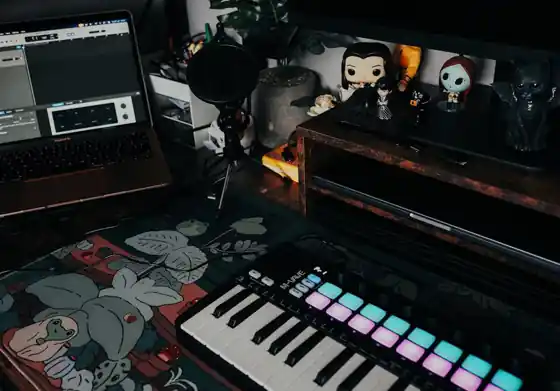
Booking a music studio is the right answer for full-band tracking, label-grade demos, DJ practice ahead of a residency, and rehearsal blocks when the room you have at home doesn't hold a drum kit. It is the wrong answer in five specific cases, and Near Me would rather you book the right setup than the most expensive one.
If you are a solo bedroom producer with a treated room, an Apollo or comparable preamp, and a working monitor pair, your home setup outproduces the budget tier of Bali music studios for a single hour of work. The studio fee buys a marginally nicer room and a session-day commitment that your bedroom doesn't ask for. Spend the Rp1M elsewhere — or on mixing your existing material rather than tracking more of it.
If you need a one-off karaoke session for a birthday or family event, Boom Box at Hard Rock Hotel Bali or one of the dedicated karaoke booths in Kuta is the right call at Rp300k, not a Rp1.5M production-grade music studio. The room mismatch hurts the experience — production rooms are quiet and intimate, not built for a group of ten people enjoying themselves on a Saturday night.
If you want music lessons for kids or yourself, you want a music school, not a studio. The two categories overlap on Google searches but answer different needs. A music school provides lesson scheduling, structured curricula, and teachers; a music studio rents you a room and gear. Searching "music school bali" instead of "music studio bali" puts you in front of the right operators.
If you are recording with remote band members, the local studio doesn't help — your local audio is fine, but the remote musicians still route through Zoom or a session platform. Riverside.fm and SquadCast handle remote multitrack better than tracking locally and pulling in the others over a video call. Book the local studio only if the full band is physically present.
If your shoot is a podcast that happens to involve music, book a podcast room from our podcast studio rental guide rather than a music recording studio — the music capabilities of an SSL desk are overbuilt for spoken-word episodes, and you pay for capability you do not use. For a band interview where the band plays a song mid-episode, the math gets closer — a recording studio in Ubud like Soma can run the music capture, but a Canggu podcast room cannot.
We list these mismatches because Near Me's job is to point you at the room that actually fits, not to push the densest cluster as a default. For a music-led brief, our music recording studio guide covers recording specifics; the Canggu recording cluster guide covers Canggu specifically; the recording studios category lists every operator in the catalogue.
Frequently asked
What's the difference between a music studio and a music recording studio in Bali?+
A music recording studio is built specifically for capture — treated walls, real preamp chain, multitrack delivery in WAV at 24-bit/48kHz. A music studio is the broader label and covers four products: recording rooms, rehearsal spaces, DJ practice booths, and karaoke-grade rooms. The same Google search returns all four under one label. Soma Sound Studios in Ubud is a recording studio; Genesis Creative Centre's music room covers recording plus DJ practice; Hard Rock Bali's Boom Box is a karaoke and demo room. Pick the format before you compare prices — the four are not interchangeable.
How much does an hour at a Bali music studio cost?+
Verified rates run from Rp300k for a karaoke session at Hard Rock Bali's Boom Box to Rp6M an hour at W Sound Suite in Seminyak. The four practical tiers: budget (Rp300k–Rp600k) for karaoke, DJ practice, or first demos; mid-market (Rp600k–Rp1.5M) at Genesis and the Denpasar production rooms for real capture; premium (Rp1.5M–Rp3.5M) at Aya, AMPS, and Mercury for production-grade sessions; destination (Rp3.5M+) at Soma, Studio42, and W Sound Suite for label work and retreat-style bookings. Match the budget to the deliverable.
Do Bali music studios offer rehearsal-only rates?+
Some do, most don't publish them openly. Rehearsal blocks at the same operator run roughly half the recording rate when the rate is published. Ubud (Studio Kubu) and Denpasar (Debeat, AMPS off-peak) are the practical clusters with usable rehearsal rooms — drum kit, bass and guitar amps, microphone stands, PA monitors. The Canggu cluster is recording-first; rehearsal is a side product when the calendar allows. Ask explicitly on the booking call; the answer will not always be on the operator's website.
Which Bali music studio has the best reviews?+
Mercury Music Studio in South Kuta sits at 5.0★ across 349 GMaps reviews — the single most-reviewed music studio in our catalogue across all formats. AMPS Music Studio in Denpasar is the highest-volume recording-focused brand at 4.6★ across 315 reviews. Aya Studios in Tabanan runs 5.0★ across 63 reviews on a retreat-package model. Soma Sound Studios in Ubud is the SSL 9000J anchor and trades volume for depth — fewer reviews, higher per-session intensity. Match the metric to your priority: volume signals reliability, the SSL console signals capability.
Can I record a full band in a Bali music studio?+
Soma Sound Studios in Ubud is the cleanest answer for full-band tracking — SSL 9000J console, separate live room from control room, multitrack capture across drums, bass, guitars, and vocals simultaneously. AMPS Music Studio in Denpasar and Mercury Music Studio in South Kuta also support full-band sessions at the production-grade tier. Genesis in Canggu and the mid-tier rooms are built more for solo or small-ensemble production; full live-band tracking strains the channel count. For a full band, book Ubud or Denpasar production rooms, not the Canggu cluster.
Are music studios in Canggu or Ubud better for recording?+
Ubud, structurally. The music cluster on Bali lives in Ubud (Soma, Studio42, Studio Kubu) and Denpasar (AMPS, Debeat, Hard Rock Boom Box), not in Canggu. Canggu's cluster is video and podcast first — Genesis is the only published-rate music room there. For tracking work, full-band sessions, and label-grade recording, the Ubud and Denpasar operators are the practical default. Canggu makes sense for DJ practice (Genesis at Rp350k/h) or a quick solo demo while you're already in the area, but not as a destination for serious music capture.
Do I need to bring my own instruments to a Bali music studio?+
Most production rooms have a drum kit, a bass amp, a guitar amp, and a couple of utility instruments on hand. Genesis Creative Centre includes electric and acoustic guitars and a Marshall amp. Soma, AMPS, and Mercury keep house instruments for tracking sessions. Specialty instruments — your specific synth, a vintage guitar, a particular vocal microphone you favour — bring them. Confirm the house inventory on the booking call rather than assuming; some operators rent specific instruments at additional rates, and full-band rates may or may not include drums depending on the room.
What's the cheapest music studio in Bali that delivers multitrack stems?+
Genesis Creative Centre in Canggu at Rp600k/h for the music studio room delivers multitrack on request — separate channels per source into Logic Pro X or Ableton Live 11. Below that, the budget tier (Boom Box at Hard Rock Bali, the karaoke and DJ-only operators) bounces to stereo by default and does not deliver stems. For first-time bookings where multitrack stems matter and the budget is below Rp1M per session, Genesis is the practical default. Above Rp1M, AMPS in Denpasar and the mid-tier Ubud rooms (Studio Kubu) add a more developed preamp chain.
Keyword cluster
About the author
Bernard Moreau· Editor-in-Chief
Editor-in-chief of Near Me. Twenty-five years in French media — most recently at Le Film Français — before moving to Bali in 2017 and turning his attention to the island's production scene. Full profile →
Ready to find a studio?
Browse our full catalog of 17+ Bali studios, or jump to the podcast category.