TL;DR
Talking head video production is one person, one camera and nowhere for a weak script to hide. A US crew charges $1,500 to $3,500 for a single two-camera interview with a short edit. A Bali studio with an operator charges Rp1.25M for one camera and Rp1.55M for two, as of April 2026, or roughly $94. It is the format this island actually lives on: 55.5% of Villo Studio's revenue across 23 months.
A talking head video is one person, one camera, and nowhere to hide
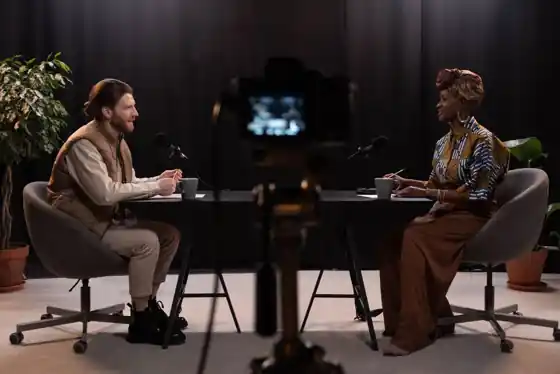
Talking head video production is the planning, filming and editing of one person speaking straight to camera. Chest up, eyes on the lens, no B-roll carrying the weight. Course modules, founder updates, YouTube channels, sales pages, internal training: same shoot, different script.
The format looks easy because there is nothing in it. That is exactly why it is unforgiving. A drone shot over a rice terrace survives a mediocre script. A face in a frame for eight minutes does not.
On this island it is not a niche format. Across 23 months of booking logs at Villo Studio, talking head work accounts for 55.5% of revenue and 62.1% of sessions - the largest service line by a distance, ahead of podcast at 21.6%. Most studios in our catalog are set up to shoot it whether or not their website uses the phrase.
Who books it here is narrower than you would expect. Villo collected 50 Russian-language reviews out of 150 on Google Maps across 2024 and 2025, with no Russian-language advertising and no full Russian site. It came through the expat course-creator community one client at a time - one of them booked 15 sessions, another nine. Online courses are made of talking head video, and on Bali that community is most of the demand.
What it costs in the west, and what it costs here

Start with the western numbers, because they are what most pricing guides mean by talking head video production.
- A two-minute talking-head explainer, one camera, one location: $3,000 to $9,000 as a project - Per finished minute: $600 to $3,000 - One interview, two cameras, lavalier, lighting, a polished two-to-three-minute edit: $1,500 to $3,500 mid-market - A freelance videographer for a shooting day: $600 to $1,200. Agencies start at $5,000 a project - A full crew day, meaning DP, gaffer, sound and PA: $3,000 to $8,000
Those ranges come from the 2026 industry guides, including Vidico's video production cost breakdown. Now Bali, collected by phone, as of April 2026.
- Villo Studio: Rp1.25M one camera, Rp1.55M two cameras, Rp1.65M three, operator included - Genesis Creative Centre: Rp950k, Rp1.1M, Rp1.25M - VoxPop Podcast Studio: Rp745k, Rp1.095M, Rp1.495M - On Air Studio: Rp1.4M for three cameras - HypeHunters Production: Rp3.8M for three cameras, the top of the regular market - Studio42 Ubud: Rp3.5M for two hours
Rp1.55M is about $94. The mid-market western equivalent of that same session is $1,500 to $3,500. You are not buying a sixteenth of the quality, because the camera bodies and the lights are broadly the same ones. You are buying an hour of labour in a country where an hour of labour costs what it costs here.
What the western number usually includes, and the Bali headline rate usually does not, is the edit. Settle where post-production sits before you compare the two figures at all.
One camera, two, or three: what the extra lens actually buys
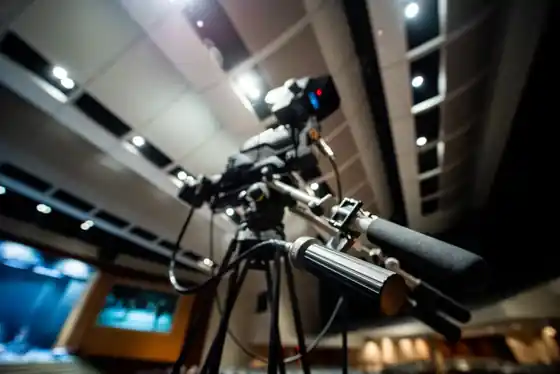
The camera count is the first thing every studio quotes and the least useful number in the quote.
One camera gives you a single unbroken angle. For a scripted course module where you cut on the words and drop in slides, that is enough, and it is the cheapest honest option on the island.
Two cameras give you a second size, usually a tighter frame, which is what lets an editor cut a sentence out without a visible jump. If you speak from notes rather than a prompter, the second camera is the one that saves the edit. At Villo it is a Rp300k step up from one.
Three cameras give you a wide plus two singles. That is an interview setup: two people, cross-cutting, reaction shots. For one speaker it mostly gives you a third file to ingest. The step from two to three at Villo is Rp100k, which tells you roughly what the third body is worth to the studio as well.
So: one speaker reading a prompter, one camera. One speaker improvising, two. Two people on camera, three. Anything past that is a shot-list problem rather than a budget problem. The video recording studio guide has the full comparison across operators.
Bad audio ends a talking head video faster than bad picture
People will watch a slightly soft image for ten minutes. Nobody watches ten minutes of hiss.
Across our visits to 17 studios on the island, the three most common noise problems, in order, are the air conditioner, a rooster outside, and the lift. The air conditioner is the one that matters for talking head work, because these sessions run long and Bali is not a climate where you switch it off and carry on. Ask how the room handles it. Some studios cut the AC during takes and cool hard between them; some have the unit far enough out to run through.
On microphones, ask which one goes on you rather than how many the studio owns. A lavalier clipped at the sternum is the default for a seated speaker and the one that disappears on camera. A shotgun overhead sounds better and needs a quieter room. If you plan to stand, move around, or present to a board, say so when you book, because it changes the answer.
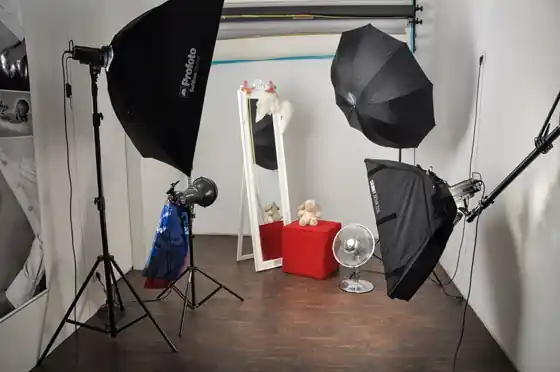
Lighting for this format is not complicated and is usually included in the rate. One soft key at roughly 45 degrees, a fill so the shadow side does not go black, and something separating your shoulders from the wall. What is worth checking is the background: plain wall, shelf, plant, cyclorama, or green screen. Green screen is a different job with different lighting demands, and a studio that owns one does not automatically light it well.
iSpring's framing guide covers the composition rules if you want to arrive with an opinion about your own frame.
Read it or know it, but do not half-remember it
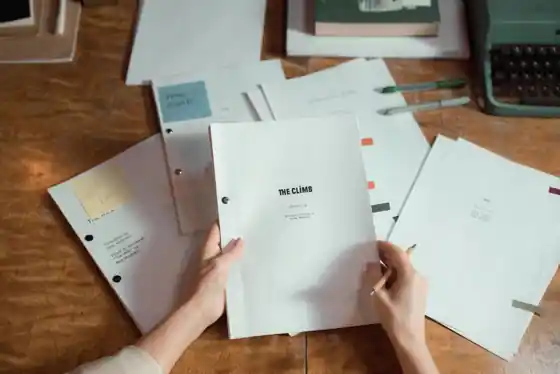
The biggest cost driver in talking head video production is not the studio rate. It is how many takes you need.
There are two modes that work. Read it: teleprompter, written script, steady progress down the page. Or know it: bullet points, improvised delivery, more takes and a second camera to stitch them together. What ruins a session is the third mode, where you half-learned the script and keep reaching for a sentence you nearly remember.
Teleprompter access is worth asking about by name. Villo includes one with the Rp1.25M single-camera rate. Not every studio at that price does, and a prompter turns an open-ended session into a predictable one.
For the script: answer first, context second. The opening fifteen seconds decide whether the rest gets watched, and a talking head has no visual hook to lean on. Write in chunks you can deliver in a single breath-length take, and mark where you intend to cut. The editor will thank you, and if the editor is you, so will next week.
The edit is where a talking head gets watchable
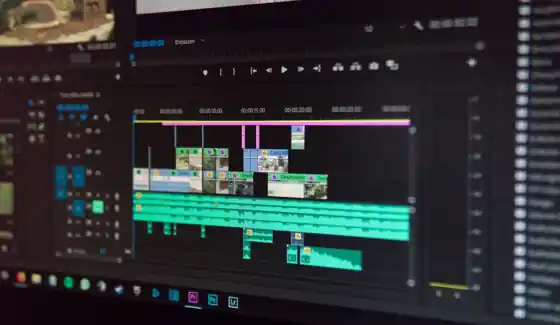
Raw talking head footage is almost always too slow. The edit is mostly subtraction: pauses trimmed, restarts removed, the throat-clearing at the top of every answer cut away.
This is the line item people forget to price. Editing sells as an upsell rather than a default here, and it was 7.1% of Villo's revenue over 23 months, which tells you how many people walk out with raw files and intend to deal with them later. Some do. Many are still intending.
Commission the edit with the shoot, from the people who shot it. They know which take you preferred, no files cross a file-transfer link, and the scope gets agreed while the room is still warm. If you would rather price it separately, the rates and the options are in the video editing guide.
Two things to specify before anyone starts. Captions: most talking head video gets watched muted on a phone first, so burned-in or a separate subtitle file is a real decision rather than a detail. And aspect ratio: if one session is feeding a landscape course and a vertical channel, say so on the shoot day, because a two-camera frame that crops cleanly to 9:16 is a framing choice made in the room, not in post.
Book one day, record ten videos
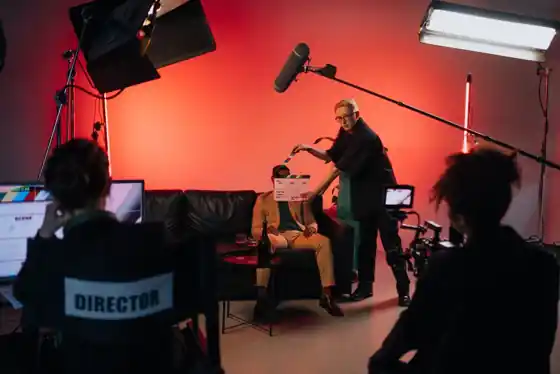
Setup eats 20 to 30 minutes of any studio session. Lights placed, microphone run, levels set, first take burned on finding your voice. Book a single hour and you spend a third of it on that. Book a day and you spend it once.
Talking head batches better than any other format, because nothing changes between videos except the words. Creators who film a whole course module in one sitting are not being efficient for its own sake. They are buying consistency: same shirt, same light, same room tone across twelve lessons, which is worth more to a finished course than any camera upgrade.
The number worth knowing: two podcasters booked Villo for 14 consecutive days at Rp24.96M, the studio's largest single-customer deal. Fourteen separate three-camera bookings at Rp1.65M would have come to Rp23.1M, so that package was not a discount. It was a held calendar and a set that never got struck. Which leads to the one strong opinion in this guide: multi-day and batch rates of 5 to 10% are normal on this island, and almost nobody advertises them. None of the studios we called led with a package price. Ask for one directly, with the number of days on the table, before you book the first day.
The same goes for studio-only rates. If you bring your own operator, Villo does Rp600k for two hours without one, and VoxPop and Aya Studios sit around Rp500k. None of that is on their websites either.
When not to book a talking head session
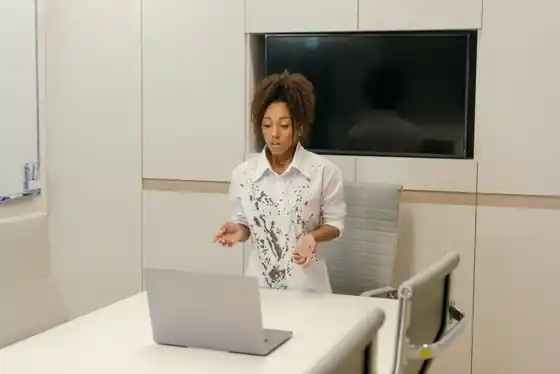
Do not book a studio for a 90-second internal update. A window, a laptop and a clip-on microphone is the correct tool, and paying Rp1.25M for a message your team watches once is a category error.
Do not book three cameras for one speaker reading a prompter. You will pay for an angle the editor opens once and closes again.
Do not book before the script exists. Studios sell hours, not writing, and the hour runs whether or not you know what you are about to say.
Do not book on Bali if you do not live on Bali. Talking head is the most location-independent format there is, because a plain wall is a plain wall, and a freelance videographer in your own city at $600 to $1,200 a day beats a cheaper room twelve time zones away once flights enter the arithmetic. We run an aggregator for studios on one island. If you are not on it, the honest answer is to search your own city.
And if what you need is a live audience rather than a recording, this is the wrong format. That is a webinar setup, which is an upload pipe and an encoder more than a pretty room, and it is covered in the webinar studio guide.
If you are on the island and the script is written, the studio catalog is the place to start. We take no commission on the booking, so we have no stake in which one you call.
Frequently asked
What is talking head video production?+
It is the planning, filming and editing of a video where one person speaks straight to camera, framed from roughly the chest up. Course modules, founder updates, testimonials, YouTube channels and internal training all use it. The defining feature is that the speaker carries the whole video, with no B-roll or location doing the work.
How much does a talking head video cost?+
In the US and comparable markets, $1,500 to $3,500 for a single two-camera interview with a short polished edit, or $600 to $3,000 per finished minute. On Bali, a studio session with an operator runs Rp1.25M for one camera and Rp1.55M for two at Villo Studio, and Rp1.1M for two cameras at Genesis Creative Centre, as of April 2026. Rp1.55M is about $94, and the edit is normally quoted separately here.
Do I need one camera or two?+
One if you are reading a teleprompter, because you cut on the words and drop in slides. Two if you are improvising, because the second, tighter frame lets an editor remove a sentence without a visible jump. Three cameras are an interview setup for two people on screen; for a single speaker the third angle rarely gets used. At Villo Studio the step from one camera to two is Rp300k, and from two to three it is Rp100k.
Is a teleprompter necessary?+
Not necessary, but it is the difference between a predictable session and an open-ended one. Reading from a prompter works and speaking from bullet points works. Half-remembering a written script is what burns takes. Villo Studio includes a teleprompter with its Rp1.25M single-camera rate, and not every studio at that price does, so ask before booking.
How many videos can I record in one session?+
More than most people plan for. Setup takes 20 to 30 minutes regardless of how long the session is, so a single hour spends a third of itself on lights and levels while a full day spends that once. Batching also keeps shirt, light and room tone identical across a whole course, which matters more to the finished product than a camera upgrade. Ask for a multi-day or batch rate: 5 to 10% is normal on Bali and almost no studio advertises it.
Can I shoot a talking head video without a studio?+
Yes, and for plenty of uses you should. A window as a key light, a plain wall, a clip-on microphone and a phone or webcam is a legitimate setup for internal updates and short social posts. A studio earns its money when the video is sold, when the look has to stay consistent across a series, or when you would rather not spend the day solving audio yourself.
What should I ask a Bali studio before booking a talking head shoot?+
Five things: whether an operator is included at that price, whether a teleprompter is available, which microphone goes on the speaker, how the room handles air-conditioning noise during long takes, and whether editing is quoted separately. Air conditioning is the most common noise problem across the 17 studios we have visited, ahead of roosters and lifts.
Is editing included in a Bali studio rate?+
Usually not. Headline session prices on the island cover the shoot; editing is sold as an upsell and accounted for 7.1% of Villo Studio's revenue over 23 months. Agree the edit before the shoot day, ideally with the people who filmed it, because they know which take you preferred and no files need handing over.
Keyword cluster
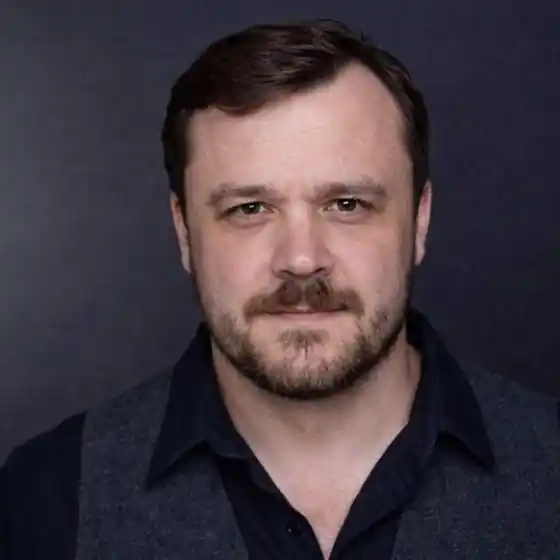
About the author
Philippe Durand· Production Specialist
Independent producer based in Canggu since 2019. Spent the last six years inside Bali's video and podcast studios — first as a hired director, now reviewing them for Near Me. Full profile →
Ready to find a studio?
Browse our full catalog of 17+ Bali studios, or jump to the podcast category.