TL;DR
A handful of Bali studios run real webinar sessions; the rest will quote you a price and then improvise on the day. Expect Rp1M–2M per hour for talking-head webinars with one camera and a producer, and Rp3M–5M for multi-camera broadcasts with redundant internet and a stream technician. The structural advantage of Bali is the timezone — UTC+8 puts a 20:00 local start at 16:00 Moscow, 13:00 Berlin, 8:00 New York. Most island studios close at 18:00, so the ones that take late slots quietly own the CIS-and-Europe-evening webinar market.
How much does a webinar studio cost on Bali?

Bali webinar studio pricing splits into three honest tiers. We checked rates against published pages and the catalog calls we made in April 2026 — final numbers shift with format (talking head vs multi-cam), session length, and whether a producer is in the room.
Budget — Rp500k to Rp900k per hour. This is a podcast-or-talking-head studio that will run a webinar if you ask, but isn't optimised for broadcast. One camera, one microphone, no switcher, no redundant internet. The output goes straight into Zoom or StreamYard from a laptop. Workable for a low-stakes internal company webinar or a guest-on-someone-else's-show appearance. Not workable for a paid course launch with 500 attendees.
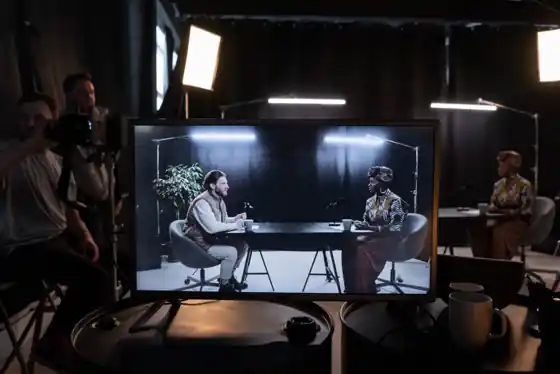
Mid-market — Rp1M to Rp2M per hour. Talking-head webinars with two cameras, a vision switcher, a producer overseeing the live feed, and a dedicated audio engineer. Villo Studio in North Kuta lists talking-head webinars at Rp800k per hour in 4K and runs late slots as standard — that lands at the bottom of this band. HypeHunters Production in Denpasar markets explicitly for webinar work and prices on request; their published 3-camera rate of Rp3.8M sits at the top of this band. This is where most professional webinar bookings land.
Premium — Rp3M to Rp5M per session. Full broadcast production: multi-camera switching, dedicated stream technician, redundant fiber internet, encoder configured for RTMP-to-multiple-platforms simultaneously (YouTube Live, LinkedIn Live, Zoom backstage), and a producer who has done it before. Villo's tracked average chek across 22 webinar sessions over 23 months is Rp3.81M — the highest average chek of any service line, which tells you who books at this tier (paid course launches, B2B product reveals, large-audience streams).
The honest summary: the spread between budget and premium is bigger here than in any other studio format on the island. A bad webinar costs more than the studio fee — it costs the launch.
What's actually included — webinar is not a podcast
Most Bali studios market "webinar capability" the same way they market podcast capability — same room, same camera, same engineer. That's not how webinars work, and the gap is where bookings fall apart on the day.
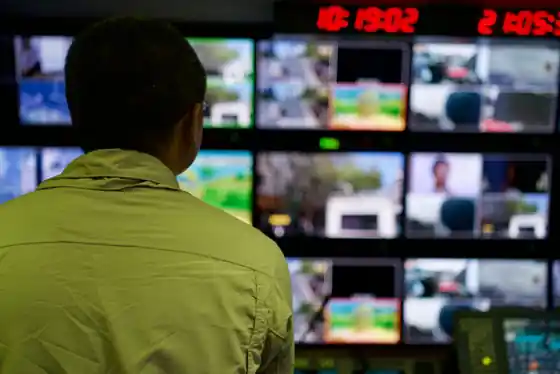
Real-time switching. A webinar is one live take. The director cuts between cameras in real time using a vision switcher; there's no edit after. A studio without a switcher (or without a producer who can run one) will give you a fixed wide shot for ninety minutes — workable for Zoom, dead-on-arrival for YouTube Live.
Redundant internet. Single-fiber connections drop. They drop more than you'd expect on Bali — typical outage frequency is one significant drop per month per ISP across the island. For a recorded podcast that's a five-minute pause; for a live webinar with a paying audience that's the session ending early. The studios that take webinar work seriously run dual-ISP setups with automatic failover. Ask by name: "do you have dual fiber from two ISPs?" — if the answer is hesitant, it's not real.
Stream encoder configured for your platform. Zoom Webinar, YouTube Live, LinkedIn Live, and StreamYard all behave slightly differently with RTMP inputs. A studio that has streamed to YouTube once does not automatically know how to push the same feed to Zoom and LinkedIn simultaneously. Send the platform names ahead of time and confirm the encoder is configured before the day.
Dedicated producer separate from camera op. The camera operator runs the cameras. The producer watches the live feed for technical drift, monitors chat, signals timing cues, and manages the encoder. These are two jobs. Studios that hand both to one person are working at the edge — fine for ten viewers, dangerous for a thousand.
Backup plan rehearsed. Failure modes are predictable on a webinar: internet drop, audio dropout, host laptop freeze. The studio should walk through the fallback for each — "if A happens, we do B" — before the session, not during.
Why the UTC+8 timezone is Bali's unfair advantage
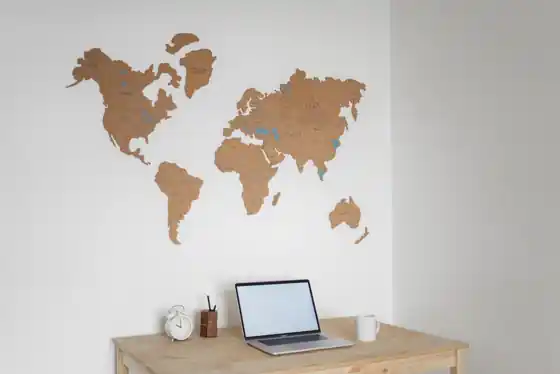
Bali sits on UTC+8 — the same as Singapore and Shanghai. For host-from-Bali webinars, that timezone is the structural product, even more than the studio fee.
A 20:00 Bali start equals 16:00 Moscow, 13:00 Berlin, and 08:00 New York. A 21:00 Bali start is 17:00 Moscow, 14:00 Berlin, 09:00 New York. Those are the prime engagement windows for CIS-and-Europe audiences — late afternoon when people have finished work but haven't disengaged for the evening. From most other host locations, hitting those windows means working in the host's own night or early morning. From Bali, it's a normal evening session.
The constraint is studio availability. Most Bali studios close at 18:00. Some close at 19:00. The two or three that take regular slots after 20:00 quietly own the CIS-and-Europe-evening webinar market — and almost none of them advertise this as their positioning. We're calling it out here because the gap is real and it's not a marketing claim. From the data we have, one studio on the island recorded twenty-two webinar sessions over twenty-three months with an average chek of Rp3.81M — the highest average across any service line in their catalog. That's not a market that doesn't exist; that's a market that hasn't been named.
Our strong take: webinar studios in Asia, and specifically Bali, are an underused segment for paid-audience info-business launches targeting CIS and Europe. The structural fit is the timezone, not the palm trees. If your audience is in Moscow, Berlin, or Tel Aviv and your launch runs between 19:00 and 22:00 their time, Bali is the natural production location — and you'll need a studio that takes the late slot. Filter by availability after 20:00 before you filter by anything else.
Where to rent — operators that actually run webinars
Of the studios in our catalog, three or four run webinar sessions as a meaningful share of bookings — not as an after-thought. The rest will quote you a price and improvise. Here are the operators worth your call.
HypeHunters Production (Denpasar) — premium broadcast, Russian-language clientele. HypeHunters markets explicitly for webinar studio work, runs a dedicated landing page for it, and lists features including dual fiber-optic internet, adjustable LED lighting, acoustic treatment, and 24/7 availability. 5.0-star rating across 22 Google reviews, published 3-camera rate of Rp3.8M. Russian-speaking team — strong fit if your audience is CIS and you need on-the-day producer communication in Russian. Pricing for webinar-specific packages is on request.
Villo Studio (North Kuta) — late-evening slots as standard. Villo runs late slots routinely (post-20:00 sessions are part of the standard offering, not a favour) and has tracked 22 webinar sessions over 23 months with an average chek of Rp3.81M. Talking-head webinars in 4K are listed at Rp800k per hour; multi-camera broadcast production runs higher. 4.9-star rating across 128 reviews, 33% of them in Russian — visible signal that the CIS-audience webinar customer is real, not theoretical.
Genesis Creative Centre (North Kuta) — high-volume facility, mainstream production. Genesis has a multi-camera setup and runs both talking-head and multi-host webinars. 4.8-star rating across 313 reviews — the highest review volume of any direct competitor on the island. Closes earlier than the late-slot specialists; verify availability for any session running past 19:00. Pricing typically Rp1.1M–1.25M per hour for 2–3 camera setups.
ICON MEDIA (Kerobokan) — published 3-camera at Rp1.9M. Solid backup option if the named three above don't have your slot. 5.0-star rating across 37 reviews. Confirm webinar-specific gear (switcher, encoder, redundant internet) by name on the call — it's a video studio that does webinars, not a webinar studio that does video.
The full catalog of operators with webinar capability lives on our streaming studios category page. For talking-head-only work where webinar is overkill, the podcast studio rental guide is the better starting point.
How to book a webinar slot — the step-by-step that works

1. Do the timezone math first. Write down your audience's local time, then convert to Bali time using UTC+8. Send both to the studio. "20:00 Moscow start = 00:00 Bali" is a different booking than "16:00 Moscow start = 20:00 Bali." The studio needs the Bali number to confirm staff availability; you need the audience number for the marketing.
2. WhatsApp the full brief. Date, both timezones, total duration with buffer (90 minutes booked for a 60-minute webinar is the safe ratio), expected attendee count, broadcast platform (Zoom, YouTube Live, LinkedIn Live, multiple), language, whether you need redundant internet, whether you need a producer separate from the camera op, and any guests joining remotely. Two paragraphs. Studios that need three follow-up messages to understand the basics are studios that will improvise on the day.
3. Demand a tech rehearsal at delivery pace. Not a gear check — a full run-through of the encoder pushing to your actual platform, with the actual audio chain, lighting set, and chat-monitoring screen in place. Forty-five minutes minimum. This is where the difference between a webinar that goes live and one that delays twenty minutes for "technical issues" gets caught. Studios that don't offer rehearsal as standard are studios that haven't done many webinars.
4. Lock the producer's name. Same principle we apply in the video studio guide and the music guide — the producer running your stream matters more than the studio's hourly rate. "We have a producer" is not a commitment. "Your producer is Dimitri, he's run six webinars to YouTube Live and four to Zoom" is a commitment.
5. Confirm redundant internet and UPS in writing. Ask the studio to write "dual fiber from two ISPs with automatic failover, plus a UPS for the production gear" into the booking confirmation. If they won't, you don't have redundancy — you have one ISP and a hope.
6. Send slides, script, and platform credentials 48 hours ahead. The producer needs login access to push to your Zoom or YouTube account in advance, not at 19:45 on the day. Use a temporary admin password if you're nervous; revoke it after.
7. Arrive 60 minutes early. Not 20–30 like a podcast. Live broadcasts have no second take — the buffer is the rehearsal of the rehearsal: lighting check, audio levels, encoder test push to the platform, chat moderator briefing, and one full run of the opening two minutes.
Common webinar booking mistakes — and what they cost

Treating any studio as webinar-capable. A podcast studio with three cameras can technically run a webinar; it can't run a broadcast-grade one. The expensive failure mode isn't that the studio refuses — it's that they accept the booking, do their best, and you find out at minute four that the YouTube Live encoder wasn't configured for your platform. Always ask by name: "do you have a real-time vision switcher, redundant internet, a dedicated stream technician?" Three named yeses or no booking.
Trusting a single internet connection. Bali ISP outages are predictable, not rare. A studio that runs single-fiber and tells you "we've never had a drop" is a studio that hasn't run enough live broadcasts to have one yet. The cost of one mid-webinar drop on a paid course launch is the launch. Insist on dual-fiber written into the contract.
Underbooking the slot. Webinars run long. Q&A always pulls. A 60-minute webinar wants a 90-minute studio booking, minimum. Overtime rates at Bali webinar-capable studios run Rp500k–1.5M per hour, charged by the half-hour after the booked window. Book the buffer up front; it's cheaper than the overtime.
Skipping the rehearsal. A 45-minute tech rehearsal the day before catches the encoder mis-configuration, the audio path that doesn't route to the stream, the lower-third graphic with the wrong logo, and the chat-monitoring screen that nobody assigned a moderator to. Skipping rehearsal saves 45 minutes and costs the entire webinar.
Booking for the wrong audience platform. A studio that has streamed to YouTube Live a hundred times is not automatically configured for Zoom Webinar. Different RTMP requirements, different latency profiles, different chat-monitoring tools. Name the platform in your initial brief and ask the producer to walk you through their previous bookings on it. "We can stream to anything" is a softer commitment than "we ran a Zoom Webinar with 800 attendees last month, here's the producer who managed it."
Forgetting that the host is half the production. A studio can't fix a host who reads slides off-camera, paces too fast, or doesn't know how the platform's poll function works. Before you book the studio, rehearse the delivery — on your own gear if you have to. The studio is the production; the host is the show.
Niche needs — multi-language, recurring series, hybrid events
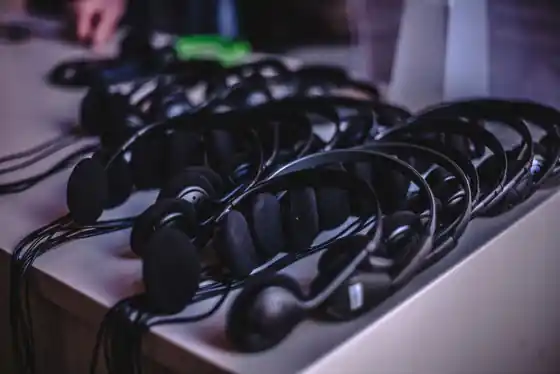
Multi-language webinars. Russian-language hosts often need either a live interpreter routed on a separate audio path (interpreter dubs in real time, audience picks language via Zoom's language channel feature) or a pre-translated voice-over track triggered in sync with the live host. The first model needs an extra audio engineer; the second needs pre-production time. HypeHunters Production in Denpasar handles Russian-language production natively. Most other Bali webinar studios will quote on request but lean on you to bring the interpreter.
Recurring weekly or monthly series. The same multi-day discount logic from the podcast studio guide applies — a 10–15% reduction is realistic for a four-or-more session block, even though almost no studio advertises it on the site. Ask explicitly: "if I book four sessions across the next eight weeks at the same slot, what's the package rate?" Most studios will negotiate.
Hybrid events with an in-room audience. Different room requirements from a host-only webinar. You need a stage (or stage area), enough seating for the live attendees, microphones for audience Q&A, and a camera angle that captures both host and audience reactions. ICON MEDIA in Kerobokan and Genesis Creative Centre have the floor space for small hybrid setups (20–40 in-room attendees). For larger in-room audiences, a dedicated venue with broadcast capability is usually more practical than a studio.
Large-audience streams (1,000+ concurrent viewers). Encoder bitrate and platform limits matter. YouTube Live and Zoom Webinar both impose constraints at scale that don't apply to a 50-viewer test. Confirm the studio's encoder can sustain 1080p at the required bitrate for the full duration without re-buffering, and that the producer has actually streamed at that scale before. "It should work" and "we've done it" are different sentences.
Pre-recorded "as-live" sessions. A growing format — the host records the full session in advance, then "airs" it on schedule with the host present in chat to answer questions in real time. Production cost drops because there's no live broadcast risk, but you still want a producer who understands the timing. Several Bali studios will run this format at a 30–40% discount versus full live production — ask for the as-live rate specifically.
Studio-as-a-service for paid course launches. The biggest single chek pattern. A founder launching a course books the studio for a series of webinars across two-to-six weeks — promo webinar, content webinar, Q&A webinar, sales close webinar. Packaged across the series, this is where the Rp3.81M-per-session economics come from. Talk to the studio about packaging the whole launch rather than booking single sessions.
When NOT to book a webinar studio on Bali
Booking a webinar studio on Bali is the right answer for paid course launches, B2B product reveals, multi-camera broadcasts to a paying audience, and any live session where the cost of a technical failure is higher than the studio fee. It's the wrong answer in four specific cases, and we'd rather you keep the budget.
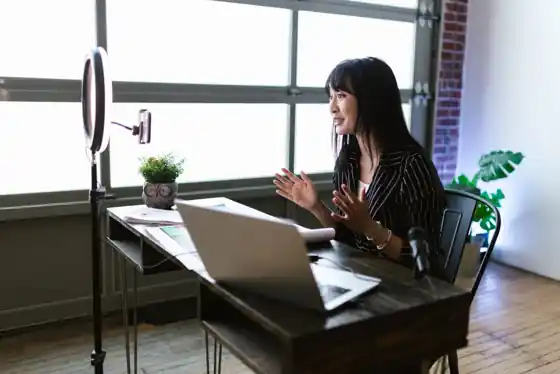
If your audience is under fifty people, comfortable on Zoom, and the session is internal or low-stakes — a home setup with a ring light, a USB condenser microphone, and a wired ethernet connection will outperform most studio bookings for that specific use. The studio fee buys you broadcast-grade redundancy and a producer; if neither moves the outcome, neither is worth paying for. A solid home setup runs Rp3–5M one-off and serves indefinitely.
If your webinar is one-time, you're presenting from slides, and the audience is colleagues or prospects who already know you — Zoom with a good microphone is enough. The studio adds production polish; for a known-relationship audience, polish doesn't move the conversion. Save the budget for the session that does.
If the event is being recorded by an external production team (a conference, a partner organisation, a third-party platform that handles the stream), you don't need a studio — you need a quiet room with good lighting. Showing up at a Bali webinar studio with someone else's stream tech in the room is a coordination problem, not a production upgrade.
If you can pre-record and edit, pre-record and edit. A pre-recorded webinar with proper post-production almost always looks better than a live one with the same gear, because you cut around the stumbles. The only reason to go live is real-time audience interaction. If your audience can interact in chat after the broadcast, live is paying a premium for nothing.
We call out these alternatives because Near Me's job is to send people to studios when they need one — not to defend studios that don't fit the brief. If your situation is one of the four above, the catalog has nothing useful for you, and that's the honest answer.
Frequently asked
What's the cheapest webinar studio on Bali?+
The bottom end of the webinar-capable market sits at Rp500k–900k per hour, typically at podcast-or-talking-head studios that will accept a webinar booking but aren't built for it. Workable for low-stakes internal sessions or guest appearances on someone else's stream. For a paid-audience launch with redundant internet and a producer, expect Rp1.5M per hour and up.
Do Bali webinar studios stay open at night?+
A few do. Most close at 18:00 or 19:00, but two or three operators run late slots (post-20:00) as a standard offering rather than a favour. Villo Studio in North Kuta runs late slots routinely; HypeHunters Production in Denpasar accepts off-hours by arrangement. If your audience is in Moscow, Berlin, or another European-evening timezone, ask about availability after 20:00 before any other filter.
Can a Bali studio handle a Zoom Webinar with 500+ attendees?+
Several can, but the studio-side capacity is rarely the bottleneck — your Zoom Webinar plan determines the attendee cap, not the studio. What matters from the studio side is encoder stability at sustained 1080p bitrate, redundant internet, and a producer who has actually run a stream at that scale. Ask the producer to name a previous booking at 500+ attendees on Zoom Webinar specifically; vague capability claims don't survive the live session.
Do I need a producer, or just a videographer?+
For a live webinar, you need both. The videographer runs the cameras and lighting; the producer watches the live feed for drift, manages the encoder, monitors audience chat, signals timing cues, and runs the backup plan if internet drops. Studios that hand both jobs to one person are working at the edge — fine for ten viewers, dangerous for a thousand. Confirm the role split before you book.
What if the internet drops mid-stream?+
Studios that take webinars seriously run dual fiber connections from two separate ISPs with automatic failover — if one drops, the second carries the stream within seconds. Studios on a single connection will pause until the link comes back, which can be ten seconds or ten minutes. Confirm dual fiber in writing before the booking; "we have backup" without naming two ISPs is not redundancy.
Can the studio stream to multiple platforms simultaneously (YouTube + LinkedIn + Zoom)?+
Yes if the encoder is configured for multi-RTMP output and the bandwidth supports the total bitrate — most webinar-capable studios on Bali do this with services like Restream or directly through OBS Studio. Confirm specifically which platforms the studio has actually streamed to before, not just "any RTMP target." YouTube Live, Zoom Webinar, and LinkedIn Live each behave slightly differently; experience on one doesn't transfer automatically.
How long should I book the studio for a 60-minute webinar?+
Ninety minutes minimum, two hours if Q&A is open-ended. Webinars run over — Q&A always pulls, technical issues eat into the broadcast window, and arriving at the end of a hard booking with no buffer means cutting questions mid-answer. Overtime at Bali webinar studios runs Rp500k–1.5M per hour, charged by the half-hour past the booked window. Booking the buffer is cheaper than the overtime.
Is the Bali-timezone-for-CIS-audience advantage real?+
Yes — and structurally so, not as a marketing claim. UTC+8 puts a 20:00 Bali start at 16:00 Moscow, 13:00 Berlin, and 08:00 New York. Those are the prime engagement windows for European-evening audiences. One Bali studio tracked 22 webinar sessions over 23 months in this niche with the highest average chek across any service line in its catalog. The constraint is studio availability — most close at 18:00. Filter by late-slot availability first.
Keyword cluster

About the author
Philippe Durand· Production Specialist
Independent producer based in Canggu since 2019. Spent the last six years inside Bali's video and podcast studios — first as a hired director, now reviewing them for Near Me. Full profile →
Ready to find a studio?
Browse our full catalog of 17+ Bali studios, or jump to the podcast category.