TL;DR
A music video in a studio buys you one thing: control. No wind, no permits, no light that changes every twenty minutes. On Bali that control is expensive in a different way, because the exteriors outside the door are free. If you do book a room, judge it on ceiling height, back wall, blackout and distance to camera, not on the microphone count. Session rates collected by phone in April 2026 run from Rp600k without an operator to Rp3.8M for three cameras with one, and almost nobody here publishes a day rate until you ask.
Studio or location: on Bali this is a real decision

A music video in a studio is a trade. You give up the rice terraces, the black sand and the twenty-minute ride to a coastline crews fly across the world for. You get a room where nothing changes between take four and take eleven.
On Bali that trade is harder to justify than almost anywhere, which is why it is worth being honest about it before anyone books anything. The exteriors here are free, close, and better than a set.
The studio wins when the video needs control. Colour that does not shift when a cloud arrives. Hard shadows you placed rather than accepted. Haze that stays where you put it. A floor you can dance on. Golden hour runs about forty minutes and you get one of them a day; a room gives you the same forty minutes from ten in the morning until you run out of money.
It also wins when the video has to be repeatable. Choreography, product shots, anything cut tight to the beat across twenty takes. Continuity outdoors on this island means racing the weather and losing. Our video production overview for Bali covers the other formats; this guide is only about the room.
The song decides the shot list, not the room
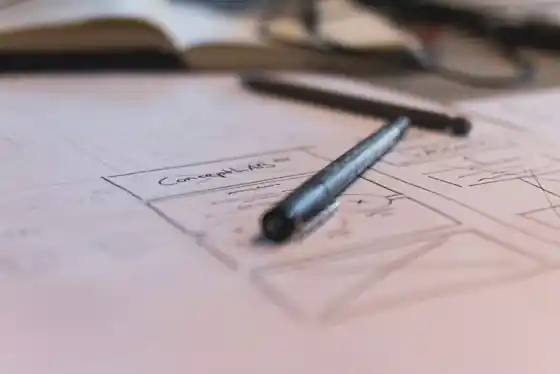
Book the room after the shot list, not before. The most expensive mistake on a music video is a studio day that exists before anyone knows what happens in it.
Start with the track and a stopwatch. Write down where the sections change: intro, verse, chorus, the drop, the bar where everything stops. Most videos are cut on those boundaries whether the director planned it or not.
Give each section one look. One lighting state, one background, one family of camera positions. Four sections means four looks, and four looks is a realistic studio day. Nine looks is not, and the ninth is where the day comes apart.
Then write the shot list against the timecode. A wide performance covering the whole track, so there is always something to cut back to. Medium for the verses. Close on the face for the chorus. Inserts last - hands, the instrument, the eyes - when the artist is tired and the wide is already safe.
A treatment helps if someone else is paying. A shot list helps even when nobody is.
What to look for in the room, and what to ignore
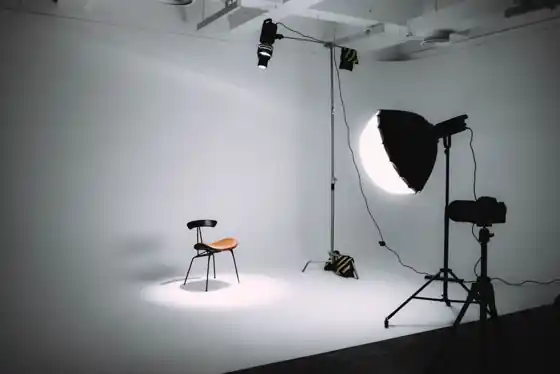
Judge the room on four things and read past most of what is on its website.
Ceiling height. Lights have to sit above frame. A three-metre ceiling with a fixed grid puts a softbox in your wide shot or forces the camera to look down at the artist. Ask for the number, not for a photograph.
The back wall and the floor. A cyclorama, a paper backdrop roll or a clean flat wall with no skirting is the difference between one hour of set dressing and four. Ask what colour it is right now and whether you may gel or repaint it.
Blackout. Coloured light only reads if the room is dark first. One uncovered window turns every gel pale by lunchtime, and the sun moves whether or not your schedule does.
Distance. Not square metres on a listing - the run from the back wall to where the camera can physically stand. A 24mm lens on full frame needs about four metres to hold a person head to toe.
Here is the part nobody says out loud: almost none of the rooms on this island were built for music video. They were built for people talking. Across 23 months of booking logs at Villo Studio, talking head work is 55.5% of revenue and 62.1% of sessions, with podcast second at 21.6%. Music video is not a line item anywhere. So the gear list on a studio page - microphone counts, acoustic panels, three cameras - describes a product you are not buying. Read past it to the ceiling, the floor and the blackout. Our studio catalog lists the rooms; the four questions above are what to ask them.
Playback is what separates a music video from footage of someone mouthing
The artist has to hear the track, loudly, in time, on every take. Without that the lip sync drifts by the second chorus and no editor can rescue it. It is the most common reason a first music video turns out unusable.
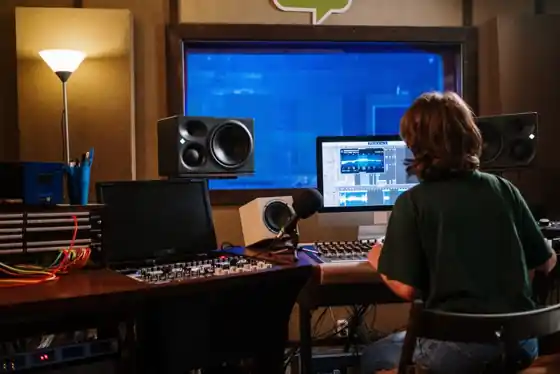
What the room needs is a PA, or monitors with enough level to fill the space over the air conditioning, at the distance the artist is actually standing. Ask about this specifically before you book. Most studios here are built to be quiet: near-field monitors for an engineer sitting a metre away, not speakers for a performer six metres out. Some have nothing you can use, and then you are renting a speaker as well as a room.
Run every take from the top of the section, never from where the last one broke. Takes that start mid-phrase cannot be intercut with each other.
Clap once, in frame, before the music starts on every take. That clap is how the edit lines twenty takes up against the master in ten seconds instead of an afternoon. Record the camera's own audio even though you will throw it away - the waveform is what the sync matches against.
And play the final master, not a rough mix. If the tempo changes afterwards, every take you shot is out of time.
Lighting and camera: what the room gives you, what you rent
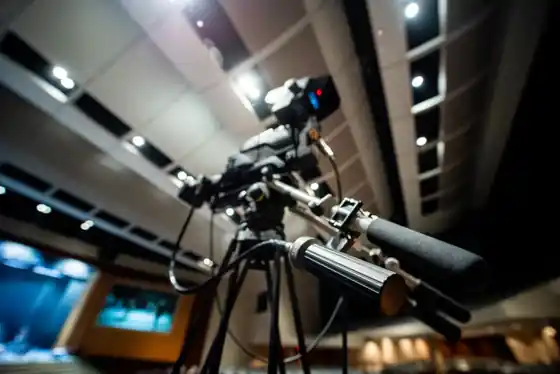
Assume the standard kit is wrong for you. A studio here is set up to light a face softly and evenly, because that is what a talking head and a podcast need. Music video usually wants the opposite: hard, coloured, directional, with something in the air.
Four questions before you pay.
Can we gel the lights, or bring our own? Some rooms are fixed LED panels on a controller, which is fine if the controller does colour and useless if it does not.
Can we use haze? Beams do not exist on camera without it. Haze also sets off smoke detectors and makes landlords nervous, so ask rather than arrive with a machine in the boot.
Can we rig anything overhead? A backlight on the grid separates the artist from the wall. Without one most rooms hand you a flat grey portrait.
Can every light in the building be switched off? Including the corridor, the kitchen, and the one nobody has a switch for.
On camera: shoot at double your delivery frame rate if you want usable slow motion, so 50fps for a 25fps cut or 60fps for 30fps, and keep the shutter at double the frame rate. Shoot flat and grade later if you know how, and do not if you do not, because a bad grade looks worse than no grade. Our camera guide for Bali covers what the studios here actually own.
The smallest crew that still works
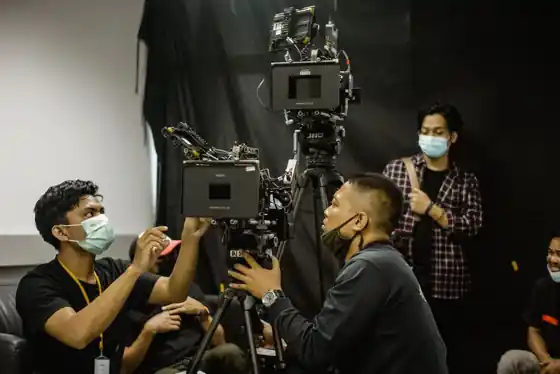
Three people plus the artist.
Somebody on camera. Somebody on lights who also moves the stand between setups. Somebody running playback, watching continuity and handling the artist between takes. That third role is the one first-timers cut, and it is the one that costs them the day.
On Bali the operator usually comes with the rate. That is how the market is priced here, and it is worth knowing who it is before you arrive: ask for a name, and ask how much music work they have shot specifically. A room that answers "our experienced team" is answering a different question.
If you are bringing a choreographer, a stylist or anyone doing hair and makeup, count them into the schedule and not only the budget. A costume change is twenty minutes, and twenty minutes is a chunk of a look you will not be shooting.
Keep everyone else out. A treated room with nine people in it has nine opinions about take six, and the artist can hear all of them.
What a shoot day costs here

Rates below were collected by phone in April 2026, per session, with an operator unless noted.
This island prices studio time by the session, mostly one or two hours. Rp600k at Creators Studio Bali for a single camera without an operator. Rp745k at VoxPop Podcast Studio, Rp950k at Genesis Creative Centre, Rp1.25M at Villo Studio for one camera and Rp1.55M for two, Rp1.7M at Hot Tea in Uluwatu. The premium end is Rp3.5M for two hours at Studio42 Ubud and Rp3.8M for three cameras at HypeHunters.
A music video does not fit that shape. You need the room from morning to evening, and almost nobody here publishes a day rate. So ask for one, in writing, before anything else is agreed. Block bookings do happen even though no studio advertises them: two podcasters took Villo Studio for 14 consecutive days for Rp24.96M, which works out at about Rp1.78M a day against a three-camera session rate of Rp1.65M. A day for roughly the price of a session is the shape of deal worth asking for, and nobody will offer it first.
Then budget the things that are not the room. A speaker, if the studio has none. Haze. Gels, or a light the room does not own. Hair and makeup. The edit, which is a real product here rather than a favour - across those same 23 months at Villo Studio, video editing was 7.1% of revenue on its own line.
For how the hourly market prices itself, our Bali podcast studio rates guide has the full ladder.
The edit: sync first, choose second
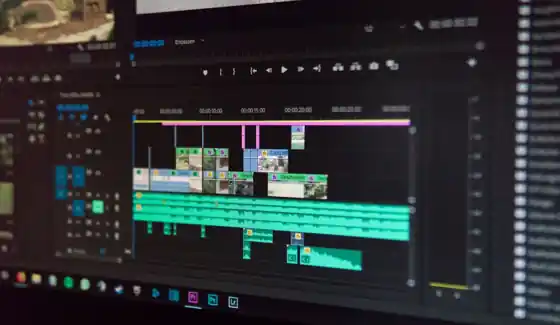
Line every take up against the master track before you watch anything. The clap does this in seconds; the camera's own audio waveform does it if you forgot to clap. Once all the takes sit on one timeline against one piece of music, editing a music video becomes choosing rather than assembling.
Cut on the track, not on the footage. The song already told you where the edits go - those section boundaries you wrote down on day one. Then break the pattern deliberately two or three times, so the cut does not feel like a metronome.
Colour last, and treat it as a decision rather than a filter. A consistent look across four setups is worth more than a dramatic one in the opening shot.
Budget more time for the edit than for the shoot. A three-minute video with four looks and twenty takes is a week of evenings, not an afternoon. If you would rather hand it over, our video editing guide for Bali covers what the island charges and what to send with it.
When not to book a studio at all
We would rather you skipped a studio day you do not need, so here is when to skip it.
The video is a performance in a place. If the treatment is the artist on a cliff at Uluwatu or in a rice field at six in the morning, a room is the wrong purchase. Bali is the reason the video will look expensive. Use it.
It is your first single and nobody is waiting for it. A studio day, a crew and an edit is a real spend against an audience that does not exist yet. Shoot it outside with a gimbal and two friends, release it, and book the room for the track that gets traction.
The track is not finished. A remaster or a tempo change makes every take you shot unusable. Wait.
You are not on Bali. Book a room in your own city. We would rather point you at a studio ten minutes from your house than have you plan a trip around a shoot day.
If none of those apply, the room earns its money. Pick it on ceiling height, floor and blackout, and get the day rate in writing before the deposit leaves your account.
Frequently asked
How much does it cost to shoot a music video in a studio on Bali?+
No studio here publishes a day rate, so you have to ask for one. Session rates collected by phone in April 2026 give you the scale: Rp600k at Creators Studio Bali for one camera without an operator, Rp745k at VoxPop, Rp950k at Genesis Creative Centre, Rp1.25M at Villo Studio, Rp1.7M at Hot Tea in Uluwatu, up to Rp3.5M for two hours at Studio42 Ubud and Rp3.8M for three cameras at HypeHunters. One block booking on record, 14 consecutive days at Villo Studio for Rp24.96M, worked out at about Rp1.78M a day.
Do I need a studio, or can I shoot a music video on location in Bali?+
Shoot on location if the video is a performance in a landscape. The exteriors here are free, twenty minutes away, and they are the reason the video will look expensive. Use a studio when you need control you cannot buy outdoors: colour that does not shift, hard shadows you placed, haze, a floor to dance on, and the same light at four in the afternoon as at ten in the morning.
What do I need for playback on a music video set?+
A speaker loud enough for the artist to hear the track over the air conditioning from where they are actually standing, the final master rather than a rough mix, and a clap in frame before the music starts on every take. Ask the studio directly whether it has a PA. Most rooms on Bali are built to be quiet and have near-field monitors for an engineer, not speakers for a performer six metres out.
How long does a music video shoot take?+
Plan one look per section of the song and roughly ninety minutes per look including the reset, which puts a four-look video at a full day with setup and breakdown. Costume changes run about twenty minutes each and come out of shooting time, not out of a budget line.
What should I look for in a studio for a music video?+
Ceiling height, the back wall and floor, blackout, and the distance from the back wall to where the camera can stand. Ignore microphone counts and acoustic treatment, because you are not recording audio in there. Then ask whether you can gel the lights, use haze, rig anything overhead, and switch off every light in the building.
Can I use haze or smoke in a Bali studio?+
Ask before you book rather than arriving with a machine. Haze sets off smoke detectors and makes landlords nervous, and some buildings will not allow it at all. Without haze, beams of light do not exist on camera, so if your treatment depends on them this one question decides the room.
What frame rate should I shoot a music video at?+
Shoot at double your delivery frame rate if you want usable slow motion, so 50fps for a 25fps cut or 60fps for 30fps, and keep the shutter at double the frame rate. Anything you plan to play at normal speed can be shot at delivery rate, which saves card space and edit time.
How long does editing a music video take?+
Longer than the shoot. Syncing the takes to the master is quick if you clapped, but choosing between twenty takes across four looks and grading them to match is a week of evenings for a three-minute track. On Bali editing is sold as its own product: it accounted for 7.1% of revenue across 23 months of bookings at Villo Studio.
Keyword cluster
About the author
Philippe Durand· Production Specialist
Independent producer based in Canggu since 2019. Spent the last six years inside Bali's video and podcast studios — first as a hired director, now reviewing them for Near Me. Full profile →
Ready to find a studio?
Browse our full catalog of 17+ Bali studios, or jump to the podcast category.